


Excellent CKA Updated 2022 Dumps With 100% Exam Passing Guarantee
Best way to practice test for Linux Foundation CKA
Introduction to Linux Foundation-CKA: Certified Kubernetes Administrator Exam
The CKA tests your ability to deploy and configure a Kubernetes cluster as well as your understanding of core concepts.
They can do any of the following without assistance:
- Core concepts
- Security
- Storage
- Logging/monitoring
- Cluster maintenance
- Application lifecycle management
- Installation, configuration & validatio
- Troubleshooting
- Networking
- Scheduling
How much Linux Foundation-CKA: Certified Kubernetes Administrator Cost and Details
Examination Name: Linux Foundation-CKA: Certified Kubernetes Administrator Passing Score: 66% or higher Length of Exam: 120 min Types of questions: Multiple Choice Questions No. of Questions: 24 Questions Examination Fees: $300 USD Retake Exam: Free
Understanding of functional and technical aspects of Cluster Architecture, Installation & Configuration
You will create a Kubernetes cluster that adheres to best practices from scratch using the kubeadm cluster bootstrapping utility. You will also perform several cluster management tasks including performing a backup the cluster, restoring the cluster from a backup, and upgrading Kubernetes in this Lab. You will also learn how to perform tests to verify that everything works as you expect. Even if you intend to use fully-managed Kubernetes clusters, this Lab provides you with a deeper understanding of Kubernetes clusters, and helps you decide on the cluster configuration that is best for your requirements.
The following will be discussed in CNCF CKA dumps:
- Manage role based access control (RBAC)
- Provision underlying infrastructure to deploy a Kubernetes cluster
- Manage a highly-available Kubernetes cluster
- Use Kubeadm to install a basic cluster
- Implement etcd backup and restore
- Perform a version upgrade on a Kubernetes cluster using Kubeadm
NEW QUESTION 15
List all the pods sorted by created timestamp
Answer:
Explanation:
kubect1 get pods--sort-by=.metadata.creationTimestamp
NEW QUESTION 16
Check the Image version of nginx-dev pod using jsonpath
Answer:
Explanation:
See the solution below.
Explanation
kubect1 get po nginx-dev -o
jsonpath='{.spec.containers[].image}{"\n"}'
NEW QUESTION 17
Create an nginx pod with container Port 80 and it should only receive traffic only it checks the endpoint / on port 80 and verify and delete the pod.
- A. kubectl run nginx --image=nginx --restart=Never --port=80 --
dry-run -o yaml > nginx-pod.yaml
// add the readinessProbe section and create
vim nginx-pod.yaml
run: nginx
name: nginx
spec:
containers:
- image: nginx
name: nginx
ports:
- containerPort: 60
readinessProbe:
httpGet:
path: /
port: 60
restartPolicy: Never
kubectl apply -f nginx-pod.yaml
// verify
kubectl describe pod nginx | grep -i readiness
kubectl delete po nginx - B. kubectl run nginx --image=nginx --restart=Never --port=80 --
dry-run -o yaml > nginx-pod.yaml
// add the readinessProbe section and create
vim nginx-pod.yaml
apiVersion: v1
kind: Pod
metadata:
labels:
run: nginx
name: nginx
spec:
containers:
- image: nginx
name: nginx
ports:
- containerPort: 80
readinessProbe:
httpGet:
path: /
port: 80
restartPolicy: Never
kubectl apply -f nginx-pod.yaml
// verify
kubectl describe pod nginx | grep -i readiness
kubectl delete po nginx
Answer: B
NEW QUESTION 18
Apply the autoscaling to this deployment with minimum 10 and maximum 20 replicas and target CPU of 85% and verify hpa is created and replicas are increased to 10 from 1
Answer:
Explanation:
kubectl autoscale deploy webapp --min=10 --max=20 --cpu percent=85 kubectl get hpa kubectl get pod -l app=webapp
NEW QUESTION 19
Create a busybox pod and add "sleep 3600" command
Answer:
Explanation:
See the solution below.
Explanation
kubectl run busybox --image=busybox --restart=Never -- /bin/sh -c
"sleep 3600"
NEW QUESTION 20
List all the pods that are serviced by the service "webservice" and copy the output in /opt/$USER/webservice.targets Note: You need to list the endpoints
Answer:
Explanation:
kubectl descrive svc webservice | grep -i "Endpoints" > /opt/$USER/webservice.targets kubectl get endpoints webservice > /opt/$USER/webservice.targets
NEW QUESTION 21
Update the deployment with the image version 1.16.1 and verify the image and check the rollout history
Answer:
Explanation:
kubectl set image deploy/webapp nginx=nginx:1.16.1 kubectl describe deploy webapp | grep Image kubectl rollout history deploy webapp
NEW QUESTION 22
Create a daemonset named "Prometheus-monitoring" using image=prom/Prometheus which runs in all the nodes in the cluster. Verify the pod running in all the nodes
- A. vim promo-ds.yaml
apiVersion: apps/v1
kind: DaemonSet
metadata:
name: prometheus-monitoring
spec:
selector:
matchLabels:
name: prometheus
template:
metadata:
labels:
name: prometheus
spec:
tolerations:
# remove it if your masters can't run pods
- key: node-role.kubernetes.io/master
effect: NoSchedule
containers:
- name: prometheus-container
- name: varlibdockercontainers
mountPath: /var/lib/docker/containers
readOnly: true
volumes:
- name: varlog
emptyDir: {}
- name: varlibdockercontainers
emptyDir: {}
kubectl apply -f promo-ds.yaml
NOTE: Deamonset will get scheduled to "default" namespace, to
schedule deamonset in specific namespace, then add
"namespace" field in metadata
//Verify
kubectl get ds
NAME DESIRED CURRENT READY UP-TO-DATE
AVAILABLE NODE SELECTOR AGE
prometheus-monitoring 8 8 0 6
0 <none> 7s
kubectl get no # To get list of nodes in the cluster
// There are 6 nodes in the cluster, so a pod gets scheduled to
each node in the cluster - B. vim promo-ds.yaml
apiVersion: apps/v1
kind: DaemonSet
metadata:
name: prometheus-monitoring
spec:
selector:
matchLabels:
name: prometheus
template:
metadata:
labels:
name: prometheus
spec:
tolerations:
# remove it if your masters can't run pods
- key: node-role.kubernetes.io/master
effect: NoSchedule
containers:
- name: prometheus-container
image: prom/prometheus
volumeMounts:
- name: varlog
mountPath: /var/log
- name: varlibdockercontainers
mountPath: /var/lib/docker/containers
readOnly: true
volumes:
- name: varlog
emptyDir: {}
- name: varlibdockercontainers
emptyDir: {}
kubectl apply -f promo-ds.yaml
NOTE: Deamonset will get scheduled to "default" namespace, to
schedule deamonset in specific namespace, then add
"namespace" field in metadata
//Verify
kubectl get ds
NAME DESIRED CURRENT READY UP-TO-DATE
AVAILABLE NODE SELECTOR AGE
prometheus-monitoring 6 6 0 6
0 <none> 7s
kubectl get no # To get list of nodes in the cluster
// There are 6 nodes in the cluster, so a pod gets scheduled to
each node in the cluster
Answer: B
NEW QUESTION 23
Create the deployment redis with image=redis and expose it with "NodePort" service redis-service
- A. kubectl create deploy redis --image=redis --dry-run -o yaml >
redis-deploy.yaml
Edit redis-deploy.yaml file
name: redis
spec:
replicas: 1
selector:
matchLabels:
app: redis
template:
metadata:
labels:
app: redis
spec:
containers:
- image: redis
name: redis
//Creating Service
kubectl expose deploy redis --type=NodePort --port=6379 --
target-port=6379 --name redis-service
// Verify
kubectl get deploy,svc - B. kubectl create deploy redis --image=redis --dry-run -o yaml >
redis-deploy.yaml
Edit redis-deploy.yaml file
vim redis-deploy.yaml
apiVersion: apps/v1
kind: Deployment
metadata:
labels:
app: redis
name: redis
spec:
replicas: 1
selector:
matchLabels:
app: redis
template:
metadata:
labels:
app: redis
spec:
containers:
- image: redis
name: redis
//Creating Service
kubectl expose deploy redis --type=NodePort --port=6379 --
target-port=6379 --name redis-service
// Verify
kubectl get deploy,svc
Answer: B
NEW QUESTION 24
An administrator accidentally closed the commit window/screen before the commit was finished. Which two options could the administrator use to verify the progress or success of that commit task? (Choose two)
- A. Task Manager
- B. Traffic Logs
- C. System Logs
- D. Configuration Logs
Answer: A,D
NEW QUESTION 25
Create a pod as follows:
* Name: mongo
* Using Image: mongo
* In a new Kubernetes namespace named
Answer:
Explanation:
See the solution below.
Explanation
solution
NEW QUESTION 26
Get list of PVs and order by size and write to file - /opt/pvlist.txt
Answer:
Explanation:
kubectl get pv --sort-by=.spec.capacity.storage > /opt/pvlist.txt
NEW QUESTION 27
Create a namespace called 'development' and a pod with image nginx called nginx on this namespace.
Answer:
Explanation:
kubectl create namespace development kubectl run nginx --image=nginx --restart=Never -n development
NEW QUESTION 28
Undo the deployment with the previous version and verify
everything is Ok
Answer:
Explanation:
kubectl rollout undo deploy webapp kubectl rollout status deploy webapp kubectl get pods
NEW QUESTION 29
Create a busybox pod which executes this command sleep 3600 with the service account admin and verify
- A. kubectl run busybox --image=busybox --restart=Always --dry-run
-o yaml -- /bin/sh -c "sleep 3600" > busybox.yml
// Edit busybox.yaml file
apiVersion: v1
kind: Pod
metadata:
creationTimestamp: null
labels:
run: busybox
name: busybox
spec:
serviceAccountName: admin
containers:
- args:
- /bin/sh
- -c
- sleep 3600
image: busybox
name: busybox
restartPolicy: Always
// verify
K kubectl describe po busybox - B. kubectl run busybox --image=busybox --restart=Always --dry-run
-o yaml -- /bin/sh -c "sleep 3600" > busybox.yml
// Edit busybox.yaml file
apiVersion: v1
kind: Pod
metadata:
creationTimestamp: null
labels:
run: busybox
name: busybox
spec:
serviceAccountName: admin
containers:
- args:
- /bin/sh
- -c
- sleep 3800
image: busybox
name: busybox
restartPolicy: Always
// verify
K kubectl describe po busybox
Answer: A
NEW QUESTION 30
List all the pods showing name and namespace with a json path expression
Answer:
Explanation:
See the solution below.
Explanation
kubectl get pods -o=jsonpath="{.items[*]['metadata.name',
'metadata.namespace']}"
NEW QUESTION 31
Create a file:
/opt/KUCC00302/kucc00302.txt that lists all pods that implement service in namespace development.
The format of the file should be one pod name per line.
Answer:
Explanation:
See the solution below.
Explanation
solution


NEW QUESTION 32
Create a pod as follows:
* Name: non-persistent-redis
* container Image: redis
* Volume with name: cache-control
* Mount path: /data/redis
The pod should launch in the staging namespace and the volume must not be persistent.
Answer:
Explanation:
See the solution below.
Explanation
solution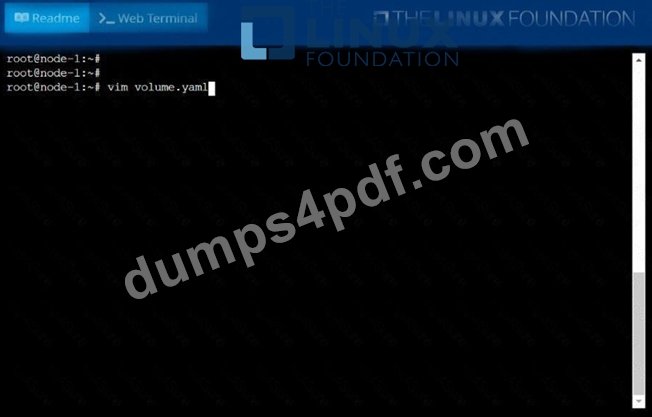


NEW QUESTION 33
Get the list of pods of webapp deployment
- A. // Get the label of the deployment
kubectl get deploy --show-labels
kubectl get pods -l app=webapp - B. // Get the label of the deployment
kubectl get deploy --show-labels
// Get the pods with that label
kubectl get pods -l app=webapp
Answer: B
NEW QUESTION 34
A bootstrap USB flash drive has been prepared using a Windows workstation to load the initial configuration of a Palo Alto Networks firewall that was previously being used in a lab. The USB flash drive was formatted using file system FAT32 and the initial configuration is stored in a file named init-cfg.txt. The firewall is currently running PAN-OS 10.0 and using a lab config. The contents of init-cgf.txt in the USB flash drive are as follows:
type=dhcp-client
Ip-address=
default-gateway=
netmask=
Ipv6-address=
Ipv6-default-gateway=
hostname=Ca-FW-DC1
panorama-server=10.5.107.20
panorama-server-2=10.5.107.21
tplname=FINANCE_TG4
dgname=finance_dg
dns-primary=10.5.6.6
dns-secondary=10.5.6.7
op-command-modes-multi-vsys.jumbo-frame
dhcp-send-hostname=yes
dhcp-send-client-id=yes
dhcp-accept-server-hostname=yes
dhcp-accept-server-domain=yes
The USB flash drive has been inserted in the firewalls' USB port, and the firewall has been restarted using command> request restart system Upon restart, the firewall fails to begin the bootstrapping process. The failure is caused because:
- A. Firewall must be in factory default state or have all private data deleted for bootstrapping
- B. PAN-OS version must be 9.1 x at a minimum, but the firewall is running 10.0x
- C. The bootstrap xml file is a required file, but it is missing
- D. The USB must be formatted using the exi3 file system, FAT32 is
- E. The hostname is a required parameter, but it is missing in init-cfg.txt
Answer: D
NEW QUESTION 35
Create a pod that having 3 containers in it? (Multi-Container)
Answer:
Explanation:
See the solution below.
Explanation
image=nginx, image=redis, image=consul
Name nginx container as "nginx-container"
Name redis container as "redis-container"
Name consul container as "consul-container"
Create a pod manifest file for a container and append container
section for rest of the images
kubectl run multi-container --generator=run-pod/v1 --image=nginx --
dry-run -o yaml > multi-container.yaml
# then
vim multi-container.yaml
apiVersion: v1
kind: Pod
metadata:
labels:
run: multi-container
name: multi-container
spec:
containers:
- image: nginx
name: nginx-container
- image: redis
name: redis-container
- image: consul
name: consul-container
restartPolicy: Always
NEW QUESTION 36
Create an nginx pod which reads username as the environment variable
- A. // create a yml file
kubectl run nginx --image=nginx --restart=Never --dry-run -o
yaml > nginx.yml
// add env section below and create
apiVersion: v1
kind: Pod
metadata:
labels:
run: nginx
name: nginx
spec:
containers:
- image: nginx
name: nginx
env:
- name: USER_NAME
restartPolicy: Never
kubectl create -f nginx.yml
//Verify
kubectl exec -it nginx - env - B. // create a yml file
kubectl run nginx --image=nginx --restart=Never --dry-run -o
yaml > nginx.yml
// add env section below and create
apiVersion: v1
kind: Pod
metadata:
labels:
run: nginx
name: nginx
spec:
containers:
- image: nginx
name: nginx
env:
- name: USER_NAME
valueFrom:
secretKeyRef:
name: my-secret
key: username
restartPolicy: Never
kubectl create -f nginx.yml
//Verify
kubectl exec -it nginx - env
Answer: B
NEW QUESTION 37
Change the label for one of the pod to env=uat and list all the pods to verify
Answer:
Explanation:
kubectl label pod/nginx-dev3 env=uat --overwrite kubectl get pods --show-labels
NEW QUESTION 38
Create a Pod nginx and specify both CPU, memory requests and limits together and verify.
- A. kubectl run nginx-request --image=nginx --restart=Always --dryrun -o yaml > nginx-request.yml
// add the resources section and create
apiVersion: v1
kind: Pod
metadata:
labels:
run: nginx
name: nginx
resources:
requests:
memory: "100Mi"
cpu: "0.4"
limits:
memory: "200Mi"
cpu: "7"
restartPolicy: Always
k kubectl apply -f nginx-request.yaml
// Verify
Kubectl top po - B. kubectl run nginx-request --image=nginx --restart=Always --dryrun -o yaml > nginx-request.yml
// add the resources section and create
apiVersion: v1
kind: Pod
metadata:
labels:
run: nginx
name: nginx-request
spec:
containers:
- image: nginx
name: nginx
resources:
requests:
memory: "100Mi"
cpu: "0.5"
limits:
memory: "200Mi"
cpu: "1"
restartPolicy: Always
k kubectl apply -f nginx-request.yaml
// Verify
Kubectl top po
Answer: B
NEW QUESTION 39
......
Certified Kubernetes Administrator (CKA) Program Exam Certification Sample Questions and Practice Exam: https://www.dumps4pdf.com/CKA-valid-braindumps.html
Real Exam Questions & Answers - Linux Foundation CKA Dump is Ready: https://drive.google.com/open?id=1_KCCja99HAs_0oDHt_qKU5RDrILn_ERm